How to Plan for Growth When Demand Feels Completely Random
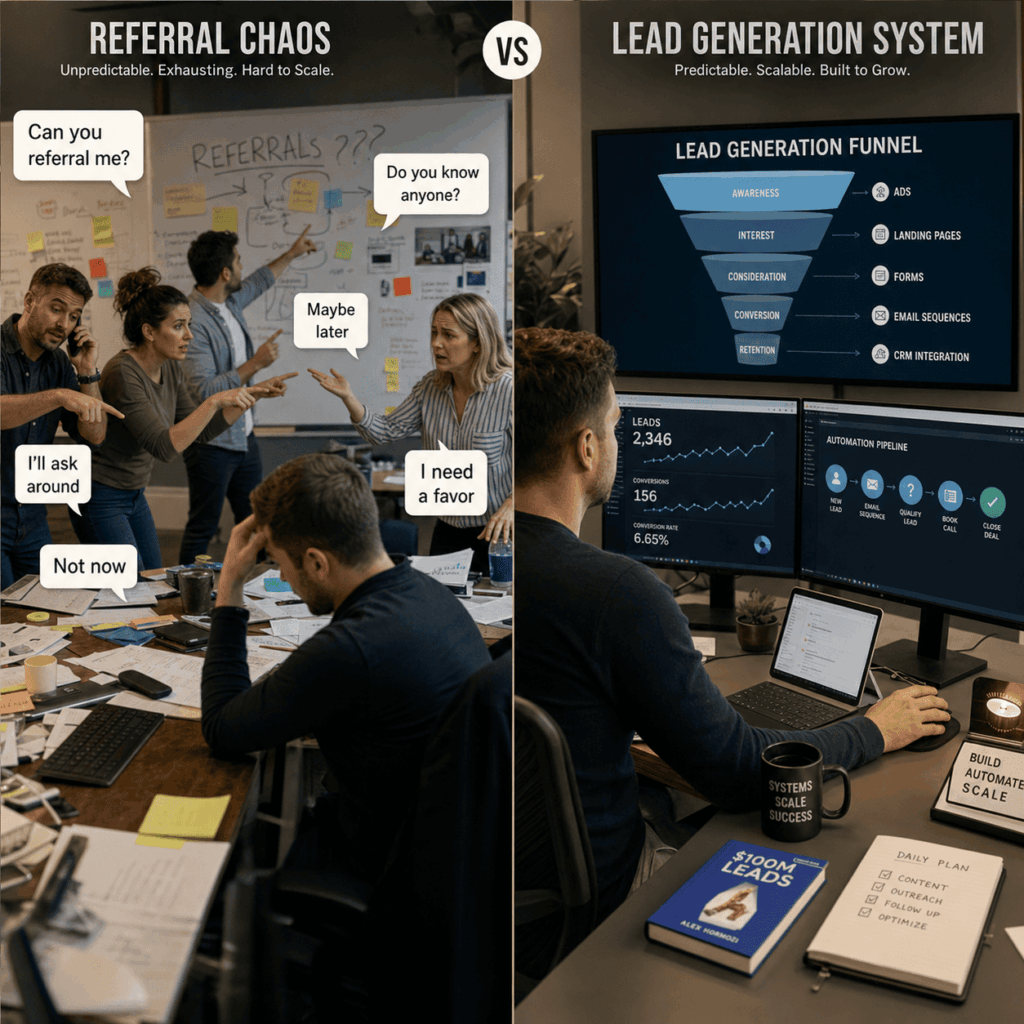
Effective growth planning for small businesses starts with creating predictable demand through systematic lead generation, not trying to forecast unpredictable patterns. The goal is to build systems that generate a consistent prospect flow regardless of market fluctuations or seasonal changes.
Creating Demand Instead of Predicting It
Most businesses try to predict demand patterns, but successful companies create their own demand through:
Consistent content marketing that educates prospects about problems you solve. This builds awareness and positions your business as the solution when prospects are ready to buy.
Automated nurturing sequences that maintain regular contact with prospects over time. Most sales happen after multiple touchpoints, but manual follow-up is inconsistent.
Strategic lead magnets that attract ideal prospects by offering valuable information in exchange for contact details. This fills your pipeline with qualified leads continuously.
Multi-channel presence that reaches prospects through various touchpoints, website, social media, email, and referral networks, working together.
The Pipeline Planning Method
Instead of guessing about future demand, plan based on your sales pipeline:
Stage-based forecasting: Assign probability percentages to prospects at each stage of your sales process. Multiply pipeline value by conversion probabilities to predict revenue.
Activity-based planning: Track how many leads you need to generate to meet specific revenue targets. Work backward from goals to required activities.
Capacity planning: Determine how many new clients you can serve effectively, then build lead generation systems to fill that capacity consistently.
Buffer planning: Maintain a pipeline that’s 3-4 times your capacity to account for natural conversion variations.
Seasonal Adjustment Strategies
Even with systematic approaches, seasonal patterns affect most businesses:
Historical analysis: Review 2-3 years of data to identify consistent seasonal patterns in your industry and market.
Proactive marketing: Increase lead generation activities 2-3 months before slow seasons to maintain pipeline flow.
Service diversification: Develop offerings that perform well during typically slow periods to smooth revenue fluctuations.
Cash flow management: Save during strong seasons to fund marketing and operations during predictably slower periods.
The key is building systems that work automatically, so you’re not constantly scrambling to generate the next sale. Our all-in-one platform includes everything needed to create predictable demand: optimized websites, lead capture systems, automated follow-up sequences, and performance tracking.
Common Mistakes That Make Growth Harder to Predict
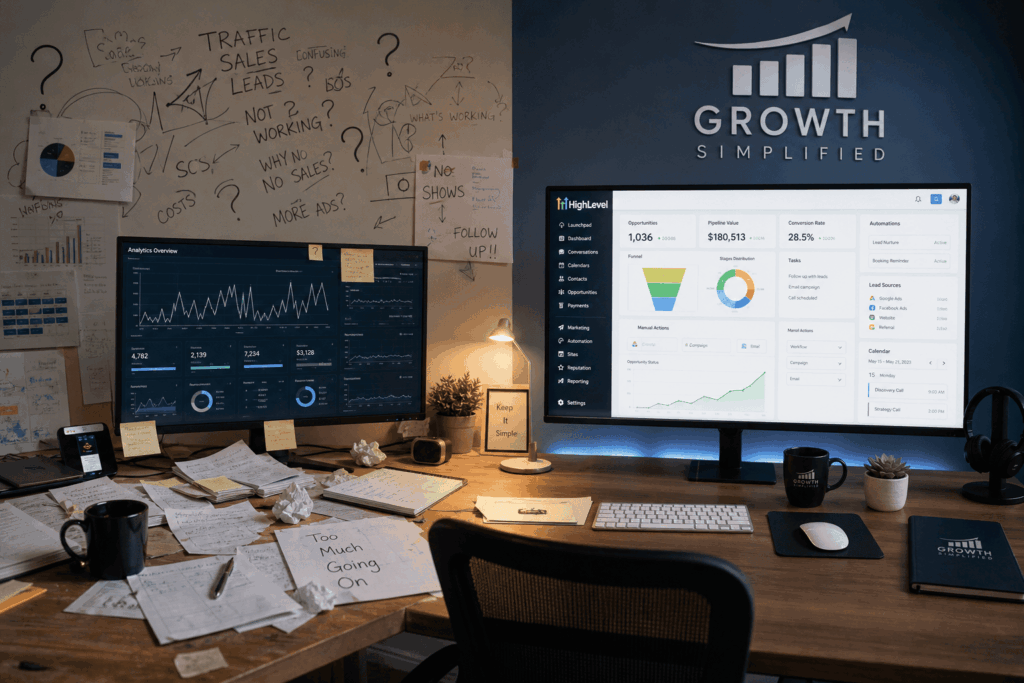
The biggest mistakes small businesses make involve scattered efforts, inconsistent execution, and trying to manage too many disconnected tools. These errors create chaos that makes growth planning for small businesses nearly impossible and amplifies business growth challenges.
The Tool Overload Trap
Many businesses collect marketing tools like trophies, thinking more tools equal better results:
Disconnected systems that don’t share data create blind spots in your sales process. You can’t see the complete customer journey from first contact to final sale.
Manual data entry between systems wastes time and creates errors. Information gets lost, prospects fall through cracks, and follow-up becomes inconsistent.
Learning curve delays mean you never master any single tool well enough to get optimal results. You’re constantly learning new interfaces instead of optimizing performance.
Subscription costs add up quickly without delivering proportional value. Many businesses spend thousands monthly on tools they barely use effectively.
The Consistency Problem
Inconsistent execution kills predictable growth:
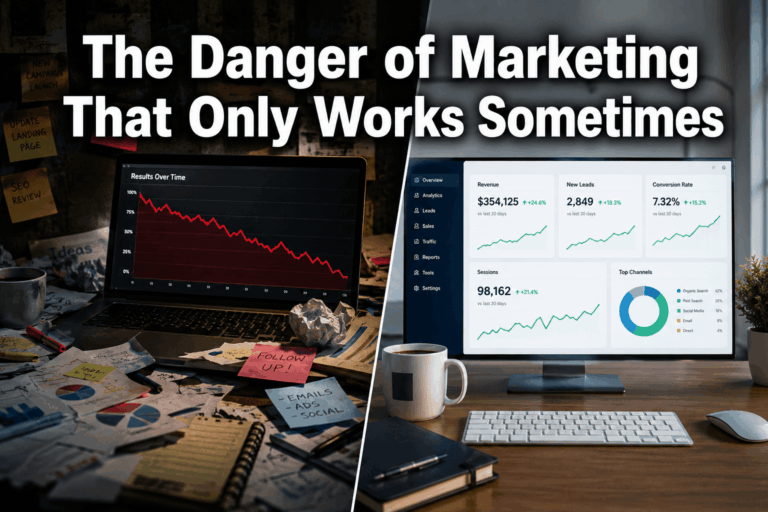
Stop-start marketing creates feast-or-famine cycles. You market when business is slow and stop when it picks up, guaranteeing future revenue drops.
Irregular follow-up loses qualified prospects who were interested but needed more time or information. Most sales require 5-7 touchpoints, but manual follow-up rarely maintains consistency.
Changing strategies too quickly prevents any approach from gaining momentum. You switch tactics before giving systems time to work.
Mood-dependent activity means your growth depends on how motivated you feel each day rather than on systematic processes.
The DIY Overreach
Trying to build everything yourself creates multiple problems:
Technical complexity overwhelms business owners who should focus on serving clients, not learning marketing technology.
Time investment that could be spent on revenue-generating activities gets consumed by system building and maintenance.
Suboptimal results because marketing systems require specialized knowledge to implement effectively.
Ongoing maintenance demands that never end as tools update, integrations break, and optimization needs continue.
The Solution: Systematic Simplicity
Successful businesses avoid these mistakes by implementing complete done-for-you systems that work together seamlessly. Instead of managing multiple tools and processes, they get:
- Single integrated platform that handles lead capture, nurturing, and conversion tracking
- Professional implementation that works correctly from day one
- Automated processes that maintain consistency regardless of daily motivation
- Clear performance data that shows exactly what drives growth
We build these complete systems for clients, including the free smart website built for you, AI-powered lead capture, and automated follow-up systems. Everything works together to generate predictable lead flow without requiring technical expertise or constant management.