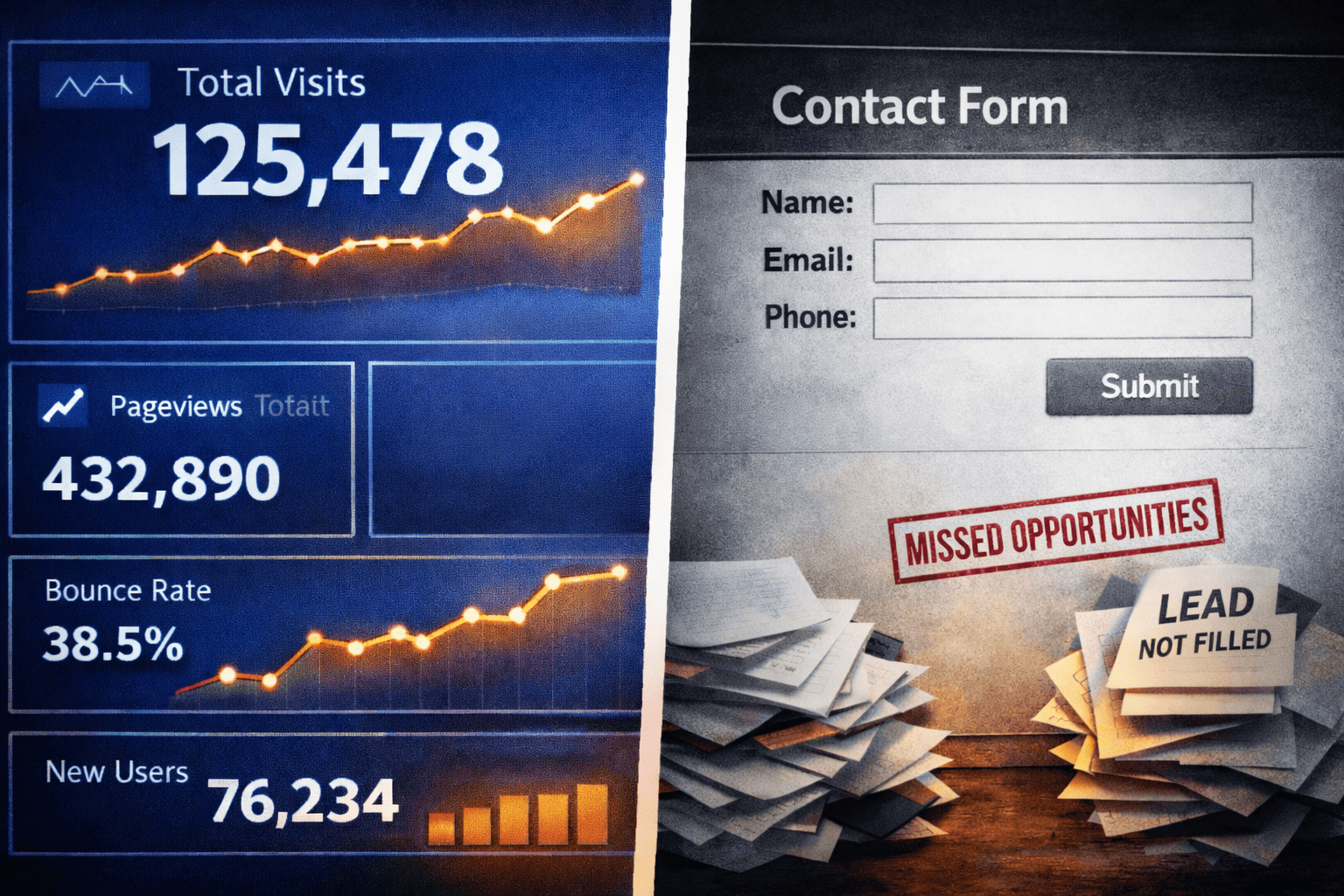
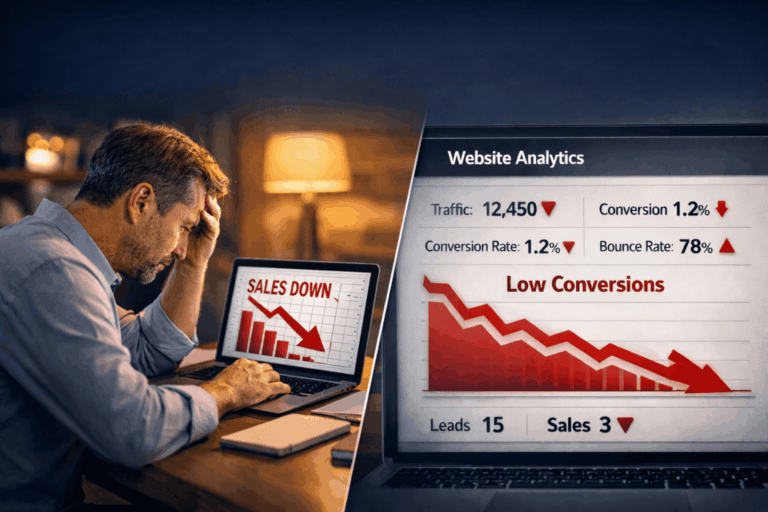
The Real Reason Traffic Doesn’t Equal Revenue
Here’s a story that illustrates the problem perfectly.
Last year, I worked with a consulting firm that was spending $3,000 per month on Google Ads. They were getting about 500 visitors to their website every month. The owner was frustrated because he wasn’t seeing results.
When I examined their setup, the problem was immediately apparent. Their ads were sending people to their generic homepage. Visitors would land there, see a bunch of corporate speak about “strategic solutions,” and leave within 30 seconds.
The traffic was fine. The conversion process was broken.
We rebuilt their system with a focus on converting visitors instead of just impressing them. Here’s what changed:
- Specific landing pages for each ad campaign that spoke directly to the visitor’s problem
- Clear value propositions that explained exactly what they’d get from working with this firm
- Simple scheduling system so prospects could book consultations without phone tag
- Automated follow-up sequences that stayed in touch with leads who weren’t ready to buy immediately
Same traffic. Same ad spend. But now they were booking 8-10 qualified consultations per month instead of 1-2.
The lesson: Traffic is just the beginning. What happens after someone visits your site determines whether you make money or just pay for analytics reports.
Most business owners focus on the wrong metrics. They celebrate website visits instead of measuring conversations. They track page views instead of tracking revenue.
Here’s what you should actually measure:
- How many visitors become leads
- How many leads become conversations
- How many conversations become customers
- How much revenue each visitor is worth
When you start thinking this way, you realize that 100 high-intent visitors are worth more than 1,000 casual browsers.
How to Build Conversion Paths That Actually Work

A conversion path is simply the route you want visitors to take from landing on your website to becoming a lead. Most websites don’t have one. They just hope people will figure out how to contact them.
Here’s how to build conversion paths that turn visitors into leads:
Step 1: Map Out Your Ideal Customer Journey
Think about how your best clients typically find and hire you. What questions do they ask? What concerns do they have? What information do they need before they’re ready to talk?
Step 2: Create Content That Matches Each Stage
- Awareness stage: Blog posts and resources that address their problems
- Consideration stage: Case studies and detailed service explanations
- Decision stage: Clear calls-to-action and easy ways to start conversations
Step 3: Make Every Page Lead Somewhere
Every page on your website should have a clear next step. Blog posts should lead to related resources or consultation bookings. Service pages should lead to case studies or scheduling links.
Step 4: Remove Barriers to Contact
Don’t make people work to reach you. Use scheduling software instead of contact forms. Offer phone consultations instead of just email responses. Make it as easy as possible to start a conversation.
Step 5: Follow Up Automatically
Most leads aren’t ready to buy immediately. Set up automated email sequences that provide value and stay in touch until they’re ready to move forward.
The businesses that do this well have systems that work whether the owner is in the office or on vacation. Leads get captured and nurtured automatically.
Why Automated Systems Beat Manual Follow-Up Every Time
Let me tell you about the biggest mistake most business owners make with website leads.
Someone fills out your contact form. You see the notification. You think, “I’ll call them back this afternoon.” Afternoon turns into tomorrow. Tomorrow turns into next week. By the time you follow up, they’ve already hired someone else.
Manual follow-up doesn’t work because:
- You forget to do it consistently
- You don’t have time when you’re busy with client work
- You don’t know what to say in follow-up messages
- You give up after one or two attempts
Automated systems solve all of these problems.
When someone visits your website and shows interest, automated systems can:
- Send them relevant information immediately
- Follow up at predetermined intervals
- Provide value without being pushy
- Track engagement and notify you when they’re ready to talk
We build these systems for our clients using AI-powered lead capture and automated follow-up sequences. A prospect can visit their website at 2 AM on Sunday and immediately start receiving helpful information. By Monday morning, the business owner has a qualified lead who’s already been educated about their services.
Here’s what a good automated system looks like:
Immediate response: As soon as someone expresses interest, they get valuable information related to their specific problem.
Educational sequence: Over the next few days, they receive case studies, tips, and resources that build trust and demonstrate expertise.
Soft follow-up: The system checks in periodically without being aggressive, providing more value each time.
Alert system: When a prospect engages heavily (opens multiple emails, visits pricing pages, downloads resources), the business owner gets notified to make personal contact.
This approach works because it provides value first and builds trust over time. By the time you have a sales conversation, the prospect already knows you can help them.
The SalesHubHQ Approach: From Traffic to Qualified Appointments
Here’s how we solve the traffic-to-leads problem for B2B service businesses.
Most companies come to us frustrated. They’re spending money on marketing but not seeing results. They have websites that look professional but don’t generate leads. They’re tired of juggling multiple tools that don’t work together.
We build complete done-for-you systems that connect traffic to real conversations.
First, we build you a free smart website designed specifically for lead generation. Not just a pretty brochure — a lead generation website that guides visitors toward booking appointments with you.
Then we implement AI-powered lead capture that identifies high-intent visitors and engages them automatically. No more hoping people will fill out contact forms.
We set up automated follow-up systems that nurture leads without requiring manual work from you. Prospects get valuable information and stay engaged until they’re ready to buy.
Everything works together on our all-in-one platform. No more juggling separate tools for your website, email marketing, scheduling, and CRM. It’s all built and implemented for your business from day one.
The result: You get a predictable growth system that turns website visitors into qualified appointments automatically. No tech knowledge required. Ready from day one.
Our clients typically see results within the first month. Instead of wondering why their traffic isn’t converting, they’re booking qualified consultations consistently.
What Success Looks Like: Turning Visitors Into Revenue

Let me show you what’s possible when you have systems that actually work.
One of our clients, a cybersecurity consultant in Atlanta, was getting about 200 website visitors per month but only booking 1-2 consultations. His website looked professional, but it wasn’t designed to convert visitors.
Here’s what we built for him:
- Industry-specific landing pages that spoke directly to manufacturing companies’ security concerns
- Clear value propositions that explained exactly how he helps companies avoid data breaches
- Case studies showing specific results for similar businesses
- Simple scheduling system so prospects could book security assessments instantly
- Automated follow-up sequences that educated prospects about cybersecurity best practices
Results after 90 days:
- Same traffic volume (about 200 visitors per month)
- 12-15 qualified consultations booked monthly
- 4-5 new clients signed per month
- 300% increase in revenue from website leads
The difference wasn’t more traffic. It was a system designed to turn visitors into customers.
Here’s what changed:
- Visitors immediately understood what he offered and who he helped
- High-intent prospects could book consultations without phone tag
- Leads who weren’t ready immediately stayed engaged through automated follow-up
- He stopped chasing unqualified leads and started talking to companies that needed his help
This is what happens when you focus on converting visitors instead of just attracting them.
Common Mistakes That Kill Website Conversions
After building lead generation systems for hundreds of B2B service companies, I’ve seen the same conversion-killing mistakes over and over.
Mistake #1: Generic Messaging
Your website talks about “solutions” and “partnerships” instead of specific problems you solve. Visitors can’t tell if you help companies like theirs.
Fix: Use specific language that addresses your ideal client’s exact situation. Instead of “We help businesses grow,” try “We help manufacturers reduce equipment downtime and increase productivity.”
Mistake #2: Hidden Contact Information
Your phone number is buried in the footer. Your contact form is on a separate page. There’s no obvious way to start a conversation.
Fix: Put clear calls-to-action on every page. Use scheduling software so prospects can book time with you instantly.
Mistake #3: No Social Proof
Visitors don’t see evidence that you’ve solved similar problems for similar companies. No testimonials, case studies, or specific results.
Fix: Feature client success stories prominently. Show specific results: “Reduced IT costs by 30%” or “Eliminated system downtime for 18 months.”
Mistake #4: Complicated Processes
You require long forms, multiple steps, or phone tag before prospects can talk to someone. High-intent visitors give up and go elsewhere.
Fix: Make it as easy as possible to start a conversation. One-click scheduling beats contact forms every time.
Mistake #5: No Follow-Up System
Leads who aren’t ready immediately fall through the cracks. You don’t stay in touch, so they hire someone else when they’re ready to buy.
Fix: Set up automated sequences that provide value and stay top-of-mind until prospects are ready to move forward.
The businesses that avoid these mistakes consistently turn website traffic into revenue. The ones that don’t keep wondering why their marketing isn’t working.
Building Your Lead Generation System
If you’re ready to turn your website visitors into leads, here’s where to start:
Audit your current website with fresh eyes. Pretend you’re a prospect who needs your help. Can you quickly understand what you do and who you help? Is there an obvious next step on every page?
Identify your conversion bottlenecks. Where are visitors leaving your site? What pages have high bounce rates? Where are you losing potential leads?
Create clear value propositions for each service you offer. Focus on specific problems you solve rather than generic capabilities.
Implement scheduling software so prospects can book consultations without phone tag. Make it the primary call-to-action on your website.
Set up basic follow-up systems for leads who aren’t ready immediately. Even simple email sequences can dramatically improve your conversion rates.
Track the right metrics. Measure leads generated, consultations booked, and revenue per visitor — not just traffic volume.
Or you can skip the trial-and-error process and work with someone who’s built these systems hundreds of times.
We specialize in creating complete done-for-you systems for B2B service businesses. We build the website and content, implement AI-powered lead capture, and set up automated follow-up systems that work from day one.
The result: You get leads captured and nurtured automatically while you focus on running your business and closing deals.
Conclusion
Getting website traffic is easy. You can buy it, optimize for it, or post your way to it. But traffic without conversions is just expensive entertainment.
The real opportunity is in building systems that turn visitors into leads and leads into customers. Most businesses fail here because they focus on attracting attention instead of capturing intent.
The businesses that succeed understand three things:
- Not all visitors are equal — focus on converting high-intent prospects, not impressing casual browsers
- Conversion requires systems — hoping people will contact you doesn’t work as well as guiding them through a clear process
- Follow-up is everything — most sales happen after multiple touchpoints, not during the first visit
When you get this right, your website becomes a predictable source of qualified leads instead of just a digital brochure.
The choice is yours: keep paying for traffic that goes nowhere, or build systems that turn visitors into revenue.